“All things manifesting in the lower worlds exist first in
the intangible rings of the upper spheres,
so that creation is, in truth,
the process of making tangible the intangible
by extending the intangible into various vibratory rates.”

― Manly P. Hall

The Qabbalah, the Secret Doctrine of Israel

Translate

Due to the changes and updates being done this section is going to change

Search the archive


Welcome Traveler to My Little Occultshop

Welcome Traveler,


It's been a whirlwind of a month, I can't say thank you enough for your support, starting next month I'll be putting out a monthly magazine about topics related to that month.


So what's new

I've added a new section that covers meals of the ancient world and a section about herbal remedies will be coming soon.


As always may your travels be light and your path be pleasant to you and your family, blessings.


Magus

Featured Sponsors

Here is what's new

Yeah I know its been 3 years since I've posted anything new. I burnt out from everything I was putting into this. and tbh what made me come back was the fact that even after 3 years this is still popular. I can't thank you enough for your continued support.

So what's new well I have a new address and with covid I've had a bit of free time. so maybe its time I got back into the captains chair and got to setting a course to places undiscovered. A part of me is happy while a part isn't because he know what's up and he doesn't like doing the hard long hours of labor.

Most popular post

My latest post on my Facebook Page My Little Occult Shop

  Its been what 2 possibly 3 years since I last posted. Burn out is what happened. I got so overwhelmed with everything that it just got to ...

Saturday, May 19, 2018

The Full Moons for the year


Northern Hemisphere full moon names by month:
January: Old Moon, Moon After Yule
February: Snow Moon, Hunger Moon, Wolf Moon
March: Sap Moon, Crow Moon, Lenten Moon
April: Grass Moon, Egg Moon, Pink Moon
May: Flower Moon, Planting Moon, Milk Moon
June: Rose Moon, Flower Moon, Strawberry Moon
July: Thunder Moon, Hay Moon
August: Green Corn Moon, Grain Moon
September: Fruit Moon, Harvest Moon
October: Harvest Moon, Hunter’s Moon
November: Hunter’s Moon, Frosty Moon, or Beaver Moon
December: Cold Moon, Moon Before Yule, or Long Night Moon

Southern Hemisphere full moon names by month:
January: Hay Moon, Buck Moon, Thunder Moon, Mead Moon
February (mid-summer): Grain Moon, Sturgeon Moon, Red Moon, Wyrt Moon, Corn Moon, Dog Moon, Barley Moon
March: Harvest Moon, Corn Moon
April: Harvest Moon, Hunter’s Moon, Blood Moon
May: Hunter’s Moon, Beaver Moon, Frost Moon
June: Oak Moon, Cold Moon, Long Night’s Moon
July: Wolf Moon, Old Moon, Ice Moon
August: Snow Moon, Storm Moon, Hunger Moon, Wolf Moon
September: Worm Moon, Lenten Moon, Crow Moon, Sugar Moon, Chaste Moon, Sap Moon
October: Egg Moon, Fish Moon, Seed Moon, Pink Moon, Waking Moon
November: Corn Moon, Milk Moon, Flower Moon, Hare Moon
December: Strawberry Moon, Honey Moon, Rose Moon

About once every 19 years, February has no full moon at all.

Friday, May 18, 2018

The Roman Festival Vestalia


The Roman celebration of Vestalia was held each year in June, near the time of Litha, the summer solstice. This festival honored Vesta, the Roman goddess who guarded virginity. She was sacred to women, and alongside Juno was considered a protector of marriage.

The Vestal Virgins

The Vestalia was celebrated from June 7 to June 15, and was a time in which the inner sanctum of the Vestal Temple was opened for all women to visit and make offerings to the goddess.

The Vestales, or Vestal Virgins, guarded a sacred flame at the temple, and swore thirty-year vows of chastity. One of the best known Vestales was Rhea Silvia, who broke her vows and conceived twins Romulus and Remus with the god Mars.

It was considered a great honor to be chosen as one of the Vestales, and was a privilege reserved for young girls of patrician birth. Unlike the other Roman priesthoods, the Vestal Virgins was the only group that was exclusive to women.

M. Horatius Piscinus of Patheos writes,

"Historians have since considered the Vestal Virgins to represent the daughters of the king, while the Salii, or leaping priests of Mars, were thought to represent the king’s sons. The participation of all of the City’s matrons, led by the flamenica Dialis, would indicate that Vesta’s hearth, and Her temple, was connected to all of the homes of individual Romans and not just that of the king’s Regia. The welfare of the City, and the welfare of every Roman’s home, resided within the wives of Roman families."

The worship of Vesta in celebration was a complex one. Unlike many Roman deities, she was not typically portrayed in statuary. Instead, the flame of the hearth represented her at the family altar. Likewise, in a town or village, the perpetual flame stood in the stead of the goddess herself.

Worshiping Vesta


For the celebration of Vestalia, the Vestales made a sacred cake, using water carried in consecrated jugs from a holy spring.

The water was never permitted to come into contact with the earth between the spring and the cake, which also included sacred salt and ritually prepared brine as ingredients. The hard-baked cakes were then cut into slices and offered to Vesta.

During the eight days of the Vestalia, only women were permitted to enter Vesta's temple for worship. When they arrived, they removed their shoes and made offerings to the goddess. At the end of Vestalia, the Vestalescleaned the temple from top to bottom, sweeping the floors of dust and debris, and carrying it away for disposal in the Tiber river. Ovid tells us that the last day of Vestalia, the Ides of June, became a holiday for people who worked with grain, such as millers and bakers. They took the day off and hung flower garlands and small loaves of bread from their millstones and shop stalls.

Vesta for Modern Pagans

Today, if you'd like to honor Vesta during the time of the Vestalia, bake a cake as an offering, decorate your home with flowers, and do a ritual cleansing the week before Litha. You can do a ritual cleansing with a Litha blessing besom.

Much like the Greek goddess Hestia, Vesta watches over domesticity and the family, and was traditionally honored with the first offering at any sacrifice made in the home.

On a public level, Vesta's flame was never allowed to burn out, so light a fire in her honor. Keep it in a place where it can safely burn overnight.

When you're working on any sort of domestic, home-focused project, such as needle arts, cooking, or cleaning, honor Vesta with prayers, songs, or hymns

Wednesday, May 16, 2018

The 9 parts of the human soul according to Ancient Egypt


In ancient Egypt, a person’s soul was thought to consist of nine separate parts which were integrated into a whole individual but had very distinct aspects.

In many ancient cultures such as those found in Asian, African, and even America, we find a Soul concept analogously similar to the concept developed by the religions of the Judeo-Christian group (including Islam) and European philosophy.

The soul, from the Vedic or Veda point of view, is the being, which by nature is eternal (without birth or death or without beginning or end) of a substance different from that of the physical body and which has its own consciousness.

From this point of view, material science or that which studies physical or material phenomena is limited because it cannot study spiritual phenomena since its nature is different from physics.

This chapter of Bhagavad Gita deals with the nature of the soul.

But just as those ancient cultures explain in detail the concept of the human soul, the ancient Egyptians, known to have been one of the most advanced ancient civilization to ever exist on Earth developed an extremely interesting concept that explains the human soul.

THE SOUL WAS NOT ONLY ONE’S CHARACTER BUT A COMPOSITE BEING OF DIFFERENT ENTITIES, EACH OF WHICH HAD ITS OWN ROLE TO PLAY IN THE JOURNEY OF LIFE AND AFTERLIFE.

The ancient Egyptians were convinced that the human soul was composed of NINE main parts: the Ren, the Ba, the Ka, the Shuyet, and the Jb, the Akh, the Sahu, the Khat and the Sechem.

(Note) In some eras, the soul was thought to be comprised of fiveparts and in others seven, but, generally, it was nine. Here we take a look at the NINE parts.

In addition to the components of the human soul, there was the human body referred to as the Ha—Haw—which was interpreted as the sum of bodily parts.

Jb (The heart) was an extremely important part of the Egyptian soul. It was believed to form from one drop of blood from the child’s mother’s heart, taken at conception. In ancient Egyptian mythology, the heart was the key to the afterlife.

Shuyet (The Shadow) is always present. The ancient Egyptians believed the shadow summarized what a person represents.

Ren (The name) was another crucial part of the soul. A person’s Ren was given to them at birth and the Egyptians believed that it would live for as long as that name was spoken.

(The personality) Resumed, the ancient Egyptians believed that Bâ was everything that makes a person unique.

Ka (The vital spark) According to the Ancient Egyptians the Ka was a vital concept in the soul as it distinguishes the difference between a living and a dead person.

Khat (The Body) the Khat was referred to by the Ancient Egyptian as the physical body which when deceased, provided the ling between the soul and one’s earthly life.

Akh (The Immortal Self) according to ancient Egyptians, the Akh was the transformed immortal self which offered a magical union of the Ba and Ka.

Sahu (The Judge) The Sahu was the aspect of Akh which would come to a person as a ghost or while asleep in dreams. Sahu was differentiated from all other aspects of the soul once the person was ‘justified’ by the God Osiris and judged worthy of eternal existence.

Sechem (Another aspect of Akh) The Sechem was another aspect of the Akh which allowed it mastery of circumstances. It was considered the vital life energy of the person which manifested itself as the power that had the ability to control one’s surroundings and outcomes.

Furthermore, according to the ancient Egyptians the human being, has eight degrees in personality:

“Ren“, or “he name, being able to keep existing according to the care of a correct embalming.

“Sejem” is the energy, the power, the light of the deceased.

“Aj” is the unification of “Ka” and “Ba”, in view of a return to existence.

“Ba“, which makes of an individual being what it is; it also applies to inanimate things. It is the closest concept to the Western “Soul”.

“Ka,” the life force. Sustained by food offerings to the deceased.

“Sheut or Shuyet” is the shadow of the person, represented by a completely black human figure.

“Seju” means the physical remains of the person.

“Jat” is the carnal part of the person.

Lecture: Caresiell and his 12 dukes


1.Carnesiell - ("radiant fire") is ranked as an emperor and king of the East.

He is also said in various other Christian demonologies to be one of the thirty-six Elemental World Rulers as well as one of the seventy-two Spirits of Solomon.

An Aerial Devil and demon of the east, Carnesiel commands 1,000 great dukes, 100 lesser dukes, 12 chief dukes, and 50,000,000,000,000 other demonic spirits.

When summoned, he will appear with 60,000,000,000,000 servitors of varying ranks, and when you call any of the dukes, their entourage is sometimes 10 spirits, but never exceeds 300.

Carnesial can appear day or night.


His 12 most important demonic dukes are

Myrezyn, ranked as a duke and is listed as one of the twelve named Servitors of Carnesiel.

Omich, duke and is one of the twelve named duke Servitors of Carnesiel

Zabriel, duke and is one of the twelve named duke Servitors of Carnesiel. 


Zabriel commands no less than ten but no more than three hundred servitors.

In the Sacred Magic of Abramelin the Mage, Zabriel is a duke and is one of the twelve named Duke Servitors of Carnesiel. 

Zabriel commands no less than ten but no more than three hundred servitors.

Source: 

Peterson, Lesser Key of Solomon, 59.

Bucafas, an Aerial Devil, is named as one of the twelve duke Servitors of Carnesiel.

Benoham,

In the Theurgia Goetia, the second book of the
Lemegeton, Benoham, an AERIAL Devil, is listed
as one of the twelve named duke Servitors of Carnesiel

Sources: 

Guiley, Encyclopedia of Demons and Demonology, 37; 
Peterson, Lesser Key of Solomon, 59;
Trirthemius, Steganographia, 49.

Arifiel,

In Theurgia Goetia, book two of the Lemegeton, Arifel is a duke and one of the twelve named

Cumeriel,

In the Theurgia Goetia, the second book of the Lemegeton, Cumerzel is named as one of the twelve duke Servitors of Carnesiel. 
He commands between ten and three hundred servants.

Sources: 

Guiley, Encyclopedia of Demons and Demonology, 37; 
Peterson, Lesser Key of Solomon, 59.

Vadriel, one of the twelve named duke Servitors of Carnesiel. 

He commands ten chiefs and one hundred servitors and is most powerful during the ninth hour of the day.

Vadriel is one of the twelve named Duke Servitors of Carnesiel. 
He commands ten chiefs and one hundred servitors and is most powerful during the ninth hour of the day.

Sources: 

Davidson, Dictionary of Angels, 60, 84, 94, 180, 191, 303, 330; 
Gettings, Dictionary of Demons, 188, 245; 
Peterson, Lesser Key of Solomon, 59; 
Waite, The Book of Ceremonial Magic, 68.

Armany, duke and one of the twelve named duke Servitors of Carnesiel.

In the Theurgia Goetia, book two of the Lemegeton, Armany is listed as a duke and one of the twelve named duke Servitors of Carnesiel.

Sources: 

Eco, Infinity of Lists, 61; 
Guiely, Encyclopedia of Demons and Demonology, 37; 
Peterson, Lesser Key of Solomon, 69.

Capriel, named as one of the twelve duke Servitors of Carnesiel.

In Theurgia Goetia, book two of the Lemegeton, Capriel is named as one of the twelve Duke Servitors of Carnesiel.

Sources: 

Belanger, Dictionary of Demons, 85; 
Peterson, Lesser Key of Solomon, 59.

Bedary, one of the twelve named duke Servitors of Carnesiel.

In the Theurgia Goetia, book two of the Lemegeton, Bedary is one of the twelve named Duke Servitors of Carnesiel.

Sources: 

Guiley, Encyclopedia of Demons and Demonology, 37; 
Peterson, Lesser Key of Solomon, 59.

Laphor, chief duke who commands between ten and three hundred servitors. 
An Aerial Devil, he is also listed as one of the twelve named duke Servitors of Carnesiel.

The Theurgia Goetia, the second book of the Lemegeton, is ranked as a chief duke who commands between ten and three hundred servitors. 

An Aerial Devil, he is also listed as one of the twelve named duke Servitors of Carnesiel .

Sources: 

Eco, Infinity of Lists, 61; 
Guiley, Encyclopedia of Demons and Demonology, 37; 
Peterson, Lesser Key of Solomon, 59.

Servitors of Carnesiel

The Theurgia Goetia, book two of the Lemegeton, says there are 60,000,000,000,000 duke servitors of CARNESIEL, but it only names twelve of them: Arifiel, ARMANY, BEDARY, BenOHAM, Bucafas, Capriel, Cumerzel, Laphor,  Myrezyn, Ornich, VADRIEL, and ZABRIEL. 

Sources: 

Butler, Ritual Magic, 77; 
Eco, Infinity of Lists, 61; 
Gettings, Dictionary of Demons, 232; 
Pane, Hierarchy of Hell, 68; 
Peterson, Lesser Key of Solomon, 59-60, 69; 
Trirthemius, Steganographia, 1, 49; 
Waite, Manual of Cartomancy and Occult Divination, 97.

THE 20 OLDEST OCCULT AND RELIGIOUS BOOKS OF ALL TIME.


If you were asked to name an old book, you would probably name something by Homer. Perhaps you might think of Beowulf. Someone religiously minded might mention Vedic texts, or perhaps the earliest writings found in the Hebrew Bible. While these literary classics are, indeed, old, a learned library science professional could probably tell you that the earliest books are from the ancient cultures of Mesopotamia and the Middle East: Sumerian, Akkadian and Egyptian.

The earliest examples of literature that we have date from 2600 BC, during the early Bronze Age. This literature is interesting, and offers a look at the thought process of early civilization. (A look at examples of the earliest literature might warrant a library science grant or fellowship.) Examples from these early writings are often found inscribed on clay tablets, and, in some cases, in other mediums. And, of course, the language used is very different from modern Western languages. But, in the end, these oldest books represent the cultural heritage of us all. Here are the 20 oldest books of all time with links included in description for each:


SUMERIAN


No one is exactly sure where the Sumerians came from, but they may have come from Iran or India. Their language was different, though, from the Semitic peoples inhabiting Mesopotamia when they arrived. Sumer occupied the area we know as southern Iraq — the land between the Tigris and Euphrates rivers. Sumer was composed of city-states, each with its own ruler. However, these city-states comprised a civilization. Many consider Sumer the first cohesive civilization.

Even though examples of writing from Egypt predate some of the writing in Sumer and other permanent settlements were established prior to the cities of the Sumerians, many scholars agree that the Sumer’s general code of law and its culture and systemic writing and mode of exchange puts Sumer in the running as the world’s oldest civilization.

  • Instructions of Shuruppak: Representing what is known as Sumerian wisdom literature, the Instructions of Shuruppak was meant to teach virtue and community standards.
  • Code of Urukagina: This is a book of law. The rules in the Code of Uruagina were part of an effort to combat the corruption under a previous ruler.
  • Epic of Gilgamesh: You’ve probably heard of the Sumerian Epic of Gilgamesh, following the exploits of this great hero of literature.
  • Curse of Agade: Tells the story of the fall of the Akkadian empire, due to the cursing of the king, Agade.
  • The Debate Between Bird and Fish: A philosophical essay, postulating a debate between a bird and a fish. A number of these literary essays exist in Sumerian literature.
  • Code of Ur-Nammu: Pre-dating the Code of Hammurabi by three centuries, the Code of Ur-Nammu has the most complete set of laws of old books.
  • Lament for Ur: When the great Sumerian city of Ur fell to the Elamites, the literary Lament for Ur was written to express the sorrow of the patron goddess of the city.
  • Enmerkar and the Lord of Arrata: A great, legendary account of the conflict between two great kings. Many scholars have drawn parallels between some of the themes in Enmerkar and the Lord of Arrata and the Tower of Babel story.

AKKADIAN


The culture of Akkad rose side by side with that of Sumer, although located originally further south. However, the Akkadians eventually became what many historians and scholars consider the first true empire. At least, it was the largest empire seen up to that point. Unlike the Sumerians, who were not Semitic, the people of Akkad were Semitic. As the Akkadians moved north, they conquered the Sumerians, and absorbed them into what became the Akkadian empire.

After the Sumerians were conquered, Akkadian culture flourished. Arts and language grew to great heights. Eventually, the capital of the Akkadian empire became the well-known city of Babylon. The Akkadian empire eventually fell, but a rich history was left behind.

  • Legend of Etana: Interestingly, the Legend of Etana tells the story of the Sumerian king Kish, and how he obtains a son with the help of Eagle — and what happens after.
  • Enheduanna’s Hymns: Are you looking for an example of women in early literature? The hymns of the priestess Enheduanna, an important woman in Ur, offers you a look.
  • Laws of Eshnunna: The city state of Eshnunna had its own set of laws. There are differences between the laws in this book, and the famous Code of Hammurabi, are instructive about the development of law in ancient times.
  • Epic of Gilgamesh: This made it to the list twice. Why? Because the Akkadians, centuries after the first stories of Gilgamesh were told, fashioned the stories into one of the earliest examples of epic poetry.
  • Kultepe Texts: These texts represent some of the first writings found in Anatolia. The Kultepe Texts include Histories of rebellions against the Akkadians.
  • Enuma Elish: The Akkadian creation epic, the Enuma Elish, can help you understand the Babylonian worldview.
  • Atra-Hasis: Tablets containing the Atra-Hasis contain an account of how the humans came to be, as well as an account of the Great Flood.

EGYPTIAN


The foundation for what we recognize as Ancient Egyptian culture had been developing for centuries, even before recorded history. However, things really picked up during the Early Dynastic Period in Egypt, when the government of Egypt — with divine kings at the center — and other portions of Egyptian culture were established.

The Early Dynastic Period was punctuated by a move to cities, as well as a flourishing artistic scene. Some of the earliest examples of writing are from Ancient Egypt, following this period and moving into the Fifth Dynasty. It is little surprise, then, that some of the oldest books of all time are from Egypt.

  • Pyramid Texts: You’ve probably heard of the Pyramid Texts. These prove that a book can even be inscribed on the walls of an edifice.
  • Palermo Stone: Chronicles the rise of legendary rulers before the god Horus. The Palermo Stone is a an example of legendary history.
  • Maxims of Ptahhotep: This ancient text, a literary work ascribed to the ruler Ptahhotep, sets out proper rules governing human relationships.
  • Coffin Texts: The coffin texts, written on (as you might expect) coffins, provide a look at the evolving Egyptian view of the afterlife.
  • Story of Sinuhe: Perhaps one of the finest examples of Egyptian literature — or any literature — the Story of Sinuhe offers a moving story of divinity and mercy and other universal themes.

Ancient Foods: Pilaf


Pilaf or pilau is a dish in which rice is cooked in a seasoned broth. In some cases, the rice may attain its brown or golden color by first being sauteed lightly in oil before the addition of broth. Cooked onion, other vegetables, as well as a mix of spices, may be added. Depending on the local cuisine, it may also contain meat, fish, vegetables, pasta, and dried fruit.

Believed to have originated in ancient India and spread from there to ancient Iran, pilaf and similar dishes are common to Balkan, Middle Eastern, Eastern Europe, South Caucasian, Central and South Asian, East African, Latin American, and Caribbean cuisines. It is a staple food and a popular dish in Afghanistan, Armenia, Azerbaijan, Bangladesh, IsraelCrete, India, Iran, Kazakhstan, Kurdistan, Kyrgyzstan, Nepal, Pakistan, Kenya, Tanzania, Zanzibar, Uganda, TajikstanTurkeyXinjiang, and Uzbekistan.

Etymology

The English spelling is influenced by the Modern Greek pilafi (πιλάφι), which comes from the Turkish pilav, which in turn comes from Persian polow (پلو‎), Hindi pulāo, from Sanskritpulāka (meaning "a ball of rice"), which in turn, is probably of Dravidian origin. A Spanish dish, paella, traditionally a communal meal made from rice and fish, shellfish, rabbit or chicken, cooked in a large pan, has similarities in recipe and methodology, but derives from a Valencian word, out of the Old French word paelle for pan (Latin: patella).

History

The ancient Hindu text Mahabharata from the Indian subcontinent, mentions rice and meat cooked together, and the word "pulao" or "pallao" is used to refer to the dish in ancient Sanskrit works, such as Yājñavalkya Smṛti.

Pilaf was known to have been served to Alexander the Great at a royal banquet following his capture of the Sogdian capital of Marakanda (modern Samarkand).

The first known recipe for pilaf is by the tenth-century Persian scholar Abu Ali Ibn Sina (Avicenna), who in his books on medical sciences dedicated a whole section to preparing various dishes, including several types of pilaf. In doing so, he described advantages and disadvantages of every item used for preparing the dish. Accordingly, Persians consider Ibn Sina to be the "father" of modern pilaf.

Pilau became standard fare in the Middle East and Transcaucasia over the years with variations and innovations by the Persians, Arabs, Turks, and Armenians. It was introduced to Israel by Bukharan and Persian Jews.

During the period of the Soviet Union, the Central Asian versions of the dish spread throughout all Soviet republics, becoming a part of the common Soviet cuisine.

Local varieties

Armenia

In Armenia there are many varieties of pilaf, most notably Armenian rice pilaf. Vermicelli is first sauteed in butter, then rice is added and sauteed as well. Once golden brown, chicken broth is added and brought to a boil. Once boiling, it is then simmered on low heat for 25 minutes. This recipe can be made with bulgur in place of rice. Another popular recipe is known as Karmir Plav (Armenian: Կարմիր փլավ: literally "red pilaf"). Karmir Plav gets its color from tomatoes. Being part of the Soviet Union, Armenia also picked up a few pilaf recipes from Central Asia such as Uzbek pilaf.

India

Known as pulao, polao, pallao and pulav locally, the rice dish has been an integral part of Indian cuisine since the ancient era. The ancient Hindu text Mahabharata from India, mentions rice and meat cooked together, and the word "pulao" or "pallao" is used to refer to the dish in ancient Sanskrit works, such as Yājñavalkya Smṛti. A pulao is a dish consisting of rice and a mixture of either lentils or vegetables, mainly including peas, potatoes, french beans, carrots or meat, mainly chicken, fish, lamb, pork or prawn. It is usually served on special occasions and weddings, though it is not uncommon to eat it for a regular lunch or dinner meal. It is considered very high in food energy and fat

A pulao is often complemented with either spiced yogurt or raita. Biryani is another rice dish in the Indian cuisine, similar to pulao, albeit with a different cooking method. The main distinction is that a biryani comprises layers of rice with meat or vegetables and it has more spices, the pulao is not layered and is cooked with light spices.

Iran

Persian culinary terms referring to rice preparation are numerous and have found their way into the neighbouring languages: polo (rice cooked in broth while the grains remain separate, straining the half cooked rice before adding the broth and then "brewing"), chelo (white rice with separate grains), kateh (sticky rice) and tajine (slow cooked rice, vegetables, and meat cooked in a specially designed dish also called a tajine). There are also varieties of different rice dishes with vegetables and herbs which are very popular among Iranians.

There are four primary methods of cooking rice in Iran:

Chelo: rice that is carefully prepared through soaking and parboiling, at which point the water is drained and the rice is steamed. This method results in an exceptionally fluffy rice with the grains separated and not sticky; it also results in a golden rice crust at the bottom of the pot called tahdig (literally "bottom of the pot").

Polo: rice that is cooked exactly the same as chelo, with the exception that after draining the rice, other ingredients are layered with the rice, and they are then steamed together.

Kateh: rice that is boiled until the water is absorbed. This is the traditional dish of Northern Iran.

Damy: cooked almost the same as kateh, except that the heat is reduced just before boiling and a towel is placed between the lid and the pot to prevent steam from escaping. Damy literally means "simmered".

In Persian cuisine, rahkshi (also known as yahni), a soup or stock, is often served over pilaf (pulao).

Central Asia

Central Asian, e.g. Tajik and Uzbek plov (Tajik: палав, Uzbek: palov) or osh differs from other preparations in that rice is not steamed, but instead simmered in a rich stew of meat and vegetables called zirvak, until all the liquid is absorbed into the rice. A limited degree of steaming is commonly achieved by covering the pot. It is usually cooked in a kazan (or deghi) over an open fire. The cooking tradition includes many regional and occasional variations. Commonly, it is prepared with lamb, browned in lamb fat or oil, and then stewed with fried onions, garlic and carrots. Chicken plov is rare but found in traditional recipes originating in Bukhara. Plov is usually spiced with whole black cumin, coriander, barberries, red pepper, marigold, and pepper. Heads of garlic and garbanzo beans are buried into the rice during cooking. Sweet variations with dried apricots, cranberries and raisins are prepared on special occasions.

Although often prepared at home for family and guests by the head of household or the housewife, plov is made on special occasions by the oshpaz (osh master chef), who cooks the national dish over an open flame, sometimes serving up to 1,000 people from a single cauldron on holidays or occasions such as weddings. Oshi nahor, or "morning plov", is served in the early morning (between 6 and 9 am) to large gatherings of guests, typically as part of an ongoing wedding celebration.

The Uzbek-style plov cooking recipes are spread nowadays throughout all post-Soviet countries and Xinjiang Uyghur Autonomous Region of China.

Afghanistan

In Afghan cuisine, Kabuli palaw or qabili palaw (Dari : قابلی پلو ) is made by cooking basmati with mutton, lamb, beef or chicken, and oil. Kabuli Palaw is cooked in large shallow and thick dishes. Fried sliced carrots and raisins are added. Chopped nuts like pistachios, walnuts, or almonds may be added as well. The meat is covered by the rice or buried in the middle of the dish. The Kabuli Palaw rice with carrots and raisins is very popular in Saudi Arabia, where it is known as roz Bukhari (Arabic: رز بخاري), meaning Bukharan rice.

Pakistan

In Pakistan, Pulao (پلاؤ‬) is a popular dish cooked with Basmati rice and meat (chicken or mutton or beef). Pulao is a rice dish, cooked in seasoned broth with rice, meat and spices. A pulao is often complimented with raita. The rice is made in mutton or beef or chicken stock and an array of spices including: coriander seeds, cumin, cardamom, cloves and others. Mutton and beef have, with time, been replaced with chicken due to higher prices of mutton. The Sindhi pulao (Sindhi: سنڌي پُلاءُ‎) in the province of Sindh, prepared with mutton or beef or chicken. It is prepared by Sindhi people of Pakistan in their marriage ceremonies, condolence meetings, and other occasions.

Azerbaijan

Azerbaijani cuisine includes more than 40 different plov recipes. One of the most reputed dishes is plov from saffron-covered rice, served with various herbs and greens, a combination distinctive from Uzbek plovs. Traditional Azerbaijani plov consists of three distinct components, served simultaneously but on separate platters: rice (warm, never hot), gara (fried meat, dried fruits, eggs, or fish prepared as an accompaniment to rice), and aromatic herbs. Rice is not mixed with the other components even when eating plov.

Greece

In the Greek cuisine, piláfi (πιλάφι) is the fluffy and soft, but neither soupy nor sticky, rice that has been boiled in a meat stock or bouillon broth. In Northern Greece, it is considered poor form to prepare piláfi on a stovetop; the pot is properly placed in the oven. Gamopílafo("wedding pilaf") is the prized pilaf served traditionally at weddings and major celebrations in Crete: rice is boiled in lamb or goat broth, then finished with lemon juice. Gamopílafo though it bears the name is not a pilaf but rather a kind of risotto, with creamy and not fluffy texture.

Caribbean

In the Eastern Caribbean and other Caribbean territories there are variations of pelau which include a wide range of ingredients such as pigeon peas, green peas, string beans, corn, carrots, pumpkin, and meat such as beef or chicken, or cured pig tail. The seasoned meat is usually cooked in a stew, with the rice and other vegetables added afterwards. Coconut milk and spices are also key additions in some islands.

Brazil

A significantly modified version of the recipe, often seen as influenced by what is called arroz pilau there, is known in Brazil as arroz de frango desfiado or incorrectly risoto de frango(Portuguese: [aˈʁoʒ dʒi ˈfɾɐ̃gu dʒisfiˈadu], "shredded chicken rice", [ʁiˈzotu], "chicken risotto"). Rice lightly fried (and optionally seasoned), salted and cooked until soft (but neither soupy nor sticky) in either water or chicken stock is added to chicken stock, onions and sometimes cubed bell peppers (cooked in the stock), shredded chicken breast, green peas, tomato sauce, shoyu, and optionally vegetables (e.g. canned sweet corn, cooked carrot cubes, courgette cubes, broccolini flowers, chopped broccoli or broccolini stalks/leaves fried in garlic seasoning) and/or herbs (e.g. mint, like in canja) to form a distantly risotto-like dish – but it is generally fluffy (depending on the texture of the rice being added), as generally, once all ingredients are mixed, it is not left to cook longer than 5 minutes. In the case shredded chicken breast is not added, with the rice being instead served alongside chicken and sauce suprême, it is known as arroz suprême de frango (Portuguese: [ɐˈʁo s(ː)uˈpɾẽm(i) dʒi ˈfɾɐ̃gu], "chicken supreme rice").

Ingredients

1 tablespoon unsalted butter
1 tablespoon vegetable oil
1 clove garlic, minced
1 small onion, finely chopped
4 cremini mushrooms, sliced thin
1 cup pearl barley
1/2 cup wheat berries
1/4 cup millet
1/2 cup wild rice, rinsed
3 cups chicken stock
2 tablespoons chopped fresh herbs (any mixture of parsley, thyme, oregano, chives, etc. per your preference)
Extra virgin olive oil, to taste
Salt, to taste
Pepper, to taste

Directions

Preheat oven to 350 degrees F.

In a large ovenproof pot with a tight­fitting lid, melt butter over low heat. Add oil, garlic, and onion.

Cook until onions are softened and translucent, 5 to 10 minutes. Raise heat to medium high and add mushrooms. Cook until soft, about 5 minutes.

Add grains and stir well, coating them with oil. Cook, stirring often, for about 10 to 15 minutes. Stir in stock and bring to a boil. Cover pot and put in oven.

Bake for 30 minutes.

Remove lid and cook a little longer if grains need to be softer. Fold in chopped herbs.

Drizzle with extra virgin olive oil. Season with salt and pepper, and serve hot.*

A Witch's List of Magickal Foods


The Secrets to Cooking Like a Witch


If you're interested in Kitchen Witchcraft, here is a useful food starter list and their magical properties. These are staple and ordinary foods that you probably already have in your pantry or refrigerator, but maybe you never realized that they contained magickal properties before.

Keep in mind that food is magick in and of itself. It doesn't need anything in order to carry magickal properties. Why is this? Because it comes directly from Mother Earth. Every form of life on this planet is a miracle, and our food is nothing short of a miracle. Vegetables, herbs, and fruits are all plants and therefore imbued with Mother Earth's love and nourishment. Meats and dairy come from Mother Earth's amazing creatures and should be shown respect and gratitude.

Making a magickal meal is as easy as praying over your food while preparing it and also being thankful for the sustenance given. Keep in mind too, that when preparing your food, whatever energy is surrounding you will also affect the food. So if you're in a good mood, dancing and singing while preparing, the food will take on some of this energy. Likewise if you're in a bad mood or nonchalant about the food you are preparing, the food will absorb some of this energy. Mindfulness is all a part of cooking like a witch. Be mindful of your ingredients, their history, their properties and how they can be nurturing to your body.


Magickal Fruits, Breads, and Sweets

Apple: known as the Wiccan food that is the sacred fruit to the Goddess. The sacred fruit to the Isle of Avalon. If you cut an apple horizontally through it's center, you will see the 5 pointed star formed by its seeds. A wiccan food that is used in love, healing, garden magic, and immortality.

Bagel: a round shaped bread with a hole that is ruled by Adonis. A food that is perfect for breakfast and is of various flavors and types. Eat bagels to create illusions. Warning: never ever eat pork products on a bagel, it brings bad luck! Sesame bagels: prosperity. Poppy bagels: eaten before bed to increase dream activity (don't eat before having to take a drug test as the poppy seeds are known to induce a positive for opiates). Salt bagels: gets rid of inconsistencies. Cinnamon bagels: makes flattery come easy.

Banana: an everyday food that is a fruit and ruled by Mars. Prevents harm and accidents while traveling cross-country or by air. To increase sexual stamina - dry and crush the banana into a powder and than rub it on your body. It has powerful lust properties because of its obvious shape.

Chocolate: can be used as flavoring or as a dessert itself; can be drank as a beverage (hot cocoa/chocolate). Hot chocolate was invented by the Mesoamerican natives, the Aztecs and Mayans were known to consume it often and believed it increased power and virility in their warriors. It was a sacred food to various ancient peoples. Chocolate is a power drug and it holds properties of love. Dark chocolate is associated with romance and intimacy. Milk chocolate is associated with nurturing and friendship. A staple for witches in the kitchen, especially for those trying to induce love or aspects of love.

Ketchup: even condiments have magickal properties! Ketchup is ruled by Venus, as it is made of tomatoes which are also ruled by Venus. When drawn in the shape of a pentagram is used for summoning or dismissing energy. When spreading on other foods, can be used in visualizing relationships. Continue to visualize or call out person's name while consuming ketchup. Ketchup is associated with love, because tomatoes were once thought to be a powerful aphrodisiac.

Oranges: this fruit is well known all over the world and dates back to prehistory. Can be used in love, joy, and inspiration magic. Placed in stockings on Christmas as sympathetic magic to encourage the return of the sun. Directly associated to the sun and solar magick. Eat to lift your spirits. Dry and grind into a powder to use in love and abundance spells.

Pasta: is ruled by Mercury. Spiral pasta: enhances creativity. Spaghetti/linguini: protection and improving communications. Corn pasta: financial creativity. Rice pasta: love.

Pizza: a delicious and recreational food that is ruled by the Sun. Eat pizza when things are difficult and you need a lucky break. Or when you get the craving.

Rum: is an alcohol that is ruled by Ellegua and Chango. Rum channels spirits of the gods and is given as an offering to attract the gods' favor. Use in baking a rum cake or mix with coke for a fun Friday night!

Sugar: is ruled by the Orishas and by the goddess of love - Venus. When powdered, sprinkle sugar on pink or red love candles to draw someone's attention. Can be used in spell jars, bags, and more.


Magickal Herbs


Basil: a popular Wiccan food for Wicca in the kitchen. A very useful and fragrant herb that can be used fresh or dried in cooking. This is a lust herb and the aroma calls forth sexual energy.

Bay: bay leaves have been used for centuries in the Mediterranean. They are believed to enhance psychic powers when burned. Add them to various dishes of Italian, Cuban, and Greek ethnicity to connect to the gods.

Chili Powder: chili powder is made from ground, dried chilis. It has been used in hoodoo and other forms of folk magic for centuries. Often it is used to in spells to "send someone away" or to shut someone up. It has a powerful kick and should be used wisely in magick and it is spicy and should be used sparingly in food (unless you like spicy foods then more power to you!)

Cilantro/Coriander: cilantro is the leaf and coriander is the seed of this tasty herb. Ruled by Mars and used in love and lust magick. If the seeds are worn will help with migraine headaches. Used in flavoring foods, great in salsa and chutney. Used in love and healing magick.

Cinnamon: a multi-purpose powdered root used in desserts and dishes. Its magical properties include abundance/money, protection, and love.

Cumin: an ancient herb used in the Middle East and Mediterranean to flavor stews and meat dishes. Blended into drinks to promote lust. Used in foods to promote love and protection. Ruled by Mars.

Oregano: used in Italian food to flavor meat and tomato dishes. Ruled by Venus. Can be used in love, happiness, luck, and protection magick. Also said to enhance psychic abilities.

Peppermint: a sweet-tasting, invigorating herb used in desserts and also drank as a tea. Carry dried peppermint leaves in your wallet to bring in more money. Said to help with stomachaches or sour stomachs. When grown in the garden is good luck.

Rosemary: an herb used to enhance intuition and psychic abilities. When taken as a supplement is said to improve memory and cognition.

Salt: while technically not an herb, salt is used to flavor many dishes both culinary and baking. It has a purifying and cleansing effect and has been used for centuries to absorb negative energies and protect oneself and house from evil. There are different kinds of salt, and it is best to stay away from iodized "table" salt. Sea salt and Himalayan pink salt are best for the body. Himalayan pink salt helps to decalcify one's pineal gland.

Thyme: an herb long associated with the fae or fairies. Ruled by Venus. Used to purify, bring pleasant dreams, worn or burned for good health, can be used in food to attract fortune, love, courage, and psychic skill.


Magickal Veggies


Carrot: root plant ruled by Mars. Because of its shape is associated with lust and fertility. When eaten by women encourages pregnancy. The flowers of the plant are known as Queen Anne's Lace. Come in various colors - white, orange, and even purple.

Lettuce: associated with the element of water, as it is made up mostly of water. Ruled by the moon and is eaten to prevent sea-sickness. Can be used in protection spells, particularly helpful if grown in the garden to protect one's home. Rubbed on face/forehead to help fall asleep. Also used in divination and chastity magick. Very healthy to eat as high in fiber, vitamins, and water content.

Onion: a masculine root plant used in various forms of magick. When cut open and left in a room will absorb sickness. Grow it in the garden to protect one's home against evil spirits. Used also in money and lust magick and will produce prophetic dreams if placed under the pillow. The Holy Trinity of vegetables to be used in many culinary dishes is carrot, celery, and onion sauteed in a butter base (shhh, don't tell anyone my secret to amazing stuffing!)

Potato: staple food in Ireland dating back centuries. Once thought to be poisonous as a part of the nightshade family, now a very common eaten food all over the world. Ruled by the moon. When eaten baked or fried can help calm an upset stomach (my own personal remedy). Used in healing magick.

Tomato: technically not a vegetable, most people consider it as such. Was thought to be the fruit of love in the Mediterranean region. Is considered a powerful aphrodisiac and is used in many Italian, Greek, and Mexican dishes.

Zucchini: a veggie (some say fruit) that is ruled by Jupiter. Whole raw zucchinis are used in sex magick. To stop a man from cheating, carve his name in the zucchini and freeze it. Eat zucchini cooked for protection and prosperity.

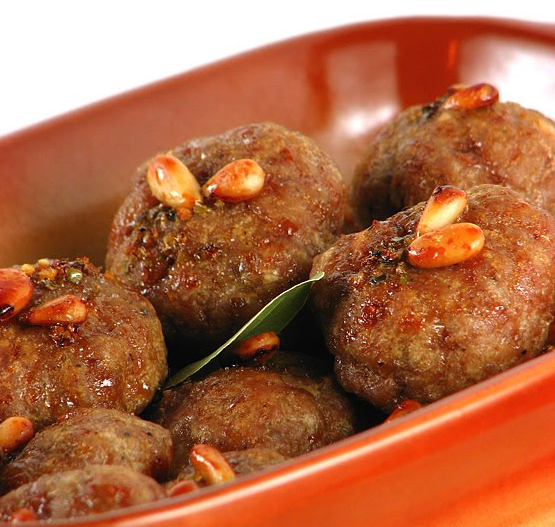
Ancient Foods: ISICIA OMENTATA aka Roman Burgers


Ingredients


minced meat 
1 french roll, soaked in white wine 
1/2 tsp freshly ground pepper 
1/2 tsp salt + a little white wine
some stone-pine kernels and green peppercorns 
a little Caroenum 
Baking foil 

Instructions

Mix minced meat with the soaked french roll. Ground spices and mix into the meat. Form small burgers and put pine kernels and peppercorns into them. Put them into baking foil and grill them together with Caroenum.